
Floor and Joist Replacement Derby
Rotten, sagging or bouncy timber floors repaired properly — joists and floorboards replaced, then finished with the new floor of your choice, across Derby and Derbyshire.
Many Derby homes have suspended timber ground floors: boards laid over joists above a ventilated void. When joists rot, split or sag, no amount of levelling on top will fix it. We lift the floor, replace or strengthen what has failed, lay a sound new subfloor and fit your new floor, so one team handles the job from joists to finish.

Signs Your Floor or Joists Need Replacing
What to look and listen for before a small problem becomes a bigger one.
A floor that bounces or springs as you walk across it, dips or sags in places, or creaks and moves more than it used to is often telling you something about the joists underneath. Boards that feel soft or spongy, gaps opening up under the skirting boards, and a musty, damp smell in the room are other common warning signs.
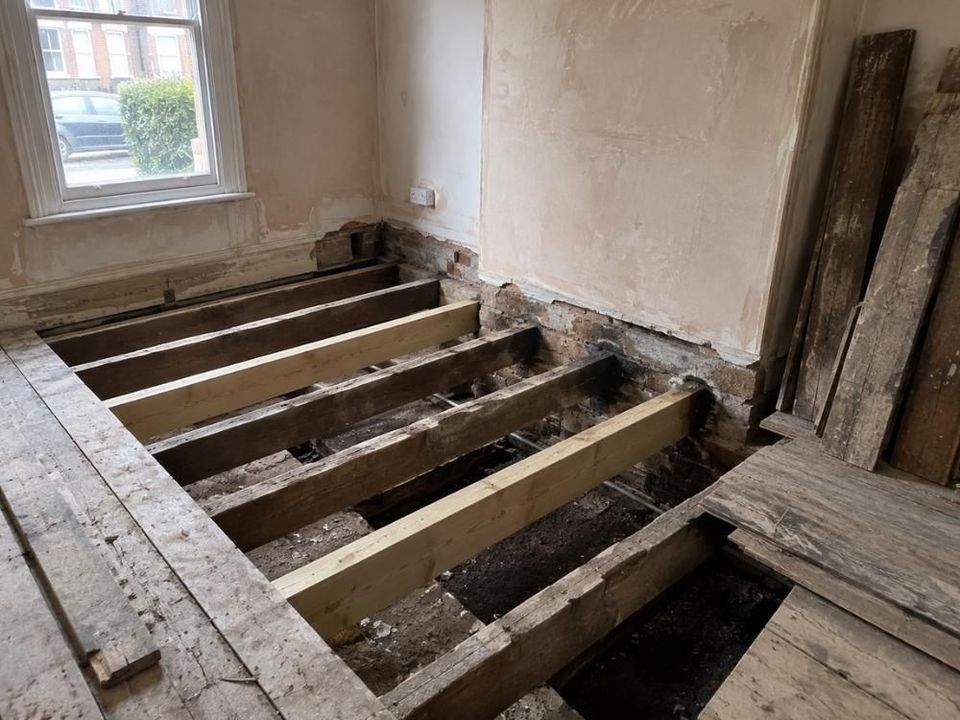
When the boards come up, the causes are usually visible: rot in the joist ends or along the boards, woodworm holes, joists that have cracked or twisted, or joists weakened where they have been cut into over the years for pipes and cables.
Why Timber Floors Fail
Suspended timber floors rely on air moving through the void underneath, through the airbricks in the outside walls. When airbricks are blocked, by raised ground levels, paths, extensions or render, moisture builds up in the void and the timber starts to rot. Leaking pipes, bathrooms and kitchens above a floor have the same effect.
Age plays a part, as does woodworm, and another common cause is joists that have been notched or drilled too deeply by previous trades running pipes and cables. Each cut on its own may look harmless, but together they can leave a joist too weak to carry the floor.
How We Replace Floors and Joists
One team from the joists to the finished floor.
We start by lifting enough of the floor to assess the joists and the void beneath. Joists that have failed are replaced with new treated timber, or strengthened alongside where the existing joist is sound enough to keep. Damaged or rotten floorboards are replaced, or the whole floor is re-boarded with a new timber subfloor.
If we find a cause that needs dealing with, such as blocked airbricks or a leak, we'll point it out so it can be fixed before the new floor goes down. Then the subfloor is levelled and prepared and your new floor is fitted, whether that's LVT, laminate, wood or carpet.
Joists and the Building Regulations
Replacing damaged joists and floorboards like for like is generally treated as a repair. Changing the structure is different: making spans longer, removing or altering a wall that supports the floor, or increasing the load on it may need building control approval, and sometimes a structural engineer's design.
Building Regulations guidance (Approved Document A) also limits how deep, and where along its length, a joist can be notched or drilled, which is why careless cuts for pipes and cables cause so many problems. We're flooring specialists rather than structural engineers, so where a job goes beyond like-for-like replacement, we'll tell you, and your local authority building control team or a structural engineer can confirm what's needed.
Related Services
Floor Preparation
Levelling, screeding and subfloor preparation before the new floor goes down.
LVT Flooring
Hard-wearing luxury vinyl, laid on a sound, level subfloor.
Laminate Flooring
A low-maintenance floor that looks just like wood.
Wood Flooring
Solid, click and engineered wood flooring.
Carpets
Carpet and underlay supplied and fitted.
Floor Tiling
Ceramic floor tiles for kitchens, bathrooms and hallways.
Floor and Joist Replacement Near You
We replace floors and joists for homes and businesses across Derby, Ripley, Heanor, Belper, Borrowash, Castle Donington, Melbourne, Alfreton, Somercotes, South Normanton, Allestree and Quarndon. Get in touch to arrange a visit and a quote.
Floor and Joist Replacement Questions
How do I know if my floor joists need replacing?
Common signs are a floor that bounces or sags, boards that feel soft or spongy, creaking and movement that's getting worse, gaps opening under the skirting boards and a musty smell. The only way to be sure is to lift some boards and look at the joists, which is the first thing we do when we assess a floor.
Can you replace just part of a floor?
Often, yes. If the damage is limited to one area, such as joist ends against a damp wall or the floor around a leaking pipe, we can replace or strengthen just those joists and boards. If the problem is widespread, re-boarding the whole room is usually the better long-term option.
Do I need Building Regulations approval to replace floor joists?
Replacing damaged joists like for like is generally treated as a repair. Changing the structure, such as longer spans, removing a supporting wall or adding load, may need building control approval and sometimes a structural engineer. If your job goes beyond like-for-like replacement we'll tell you, and your local authority building control team can confirm what's needed.
What causes floor joists to rot?
Usually moisture. Suspended timber floors need air moving through the void beneath them via airbricks, and when those are blocked, damp builds up and the timber rots. Leaks from pipes, bathrooms and kitchens cause the same problem. Woodworm and old cuts for pipes and cables can weaken joists too.
Can a sagging floor just be levelled instead?
Not if the joists have failed. Levelling compound or plywood on top can hide a dip for a while, but it doesn't fix the structure underneath, and the problem will come back through the new floor. The joists need replacing or strengthening first; then the floor can be levelled and prepared properly.
What floor can go down after the joists are replaced?
Any of the floors we fit. Once the new subfloor is down and level, we can fit LVT, laminate, wood, carpet or tiles, so you have one team from the joists to the finished floor.
