
Flooring Fitters in Hilton and Etwall
Covering Hilton, Etwall, Findern, Willington and the villages west of Derby.
Hilton went up almost entirely inside fifteen years, so its floors are reaching replacement age together. Etwall is three centuries older. We ask how old the house is before we quote, because here that answer changes everything.

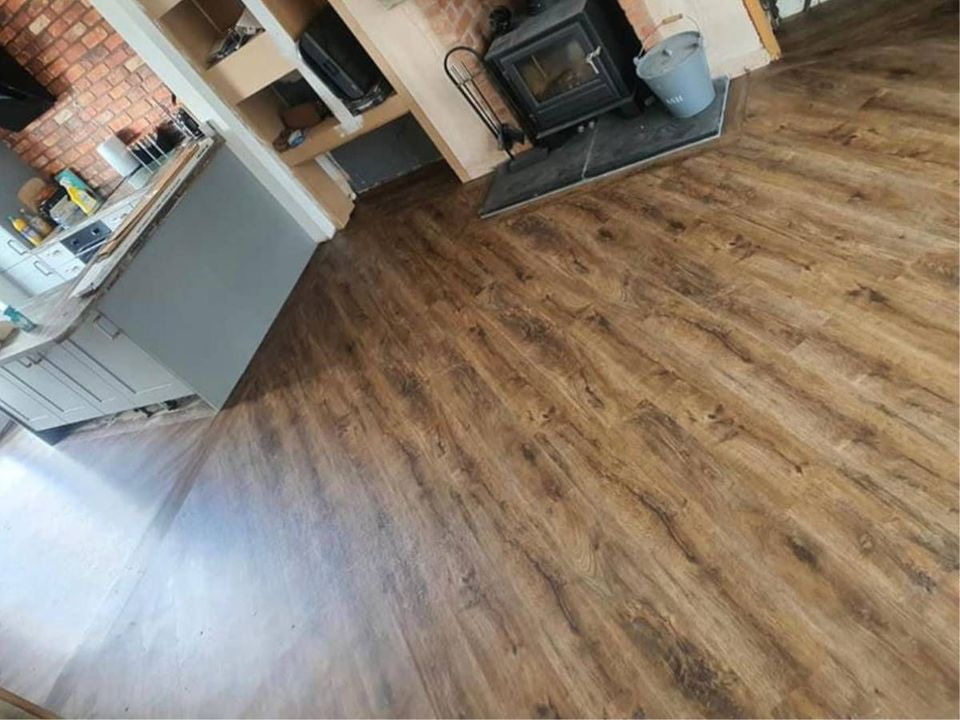
Recent Work
Domestic and nursery jobs from across Derby and Derbyshire.
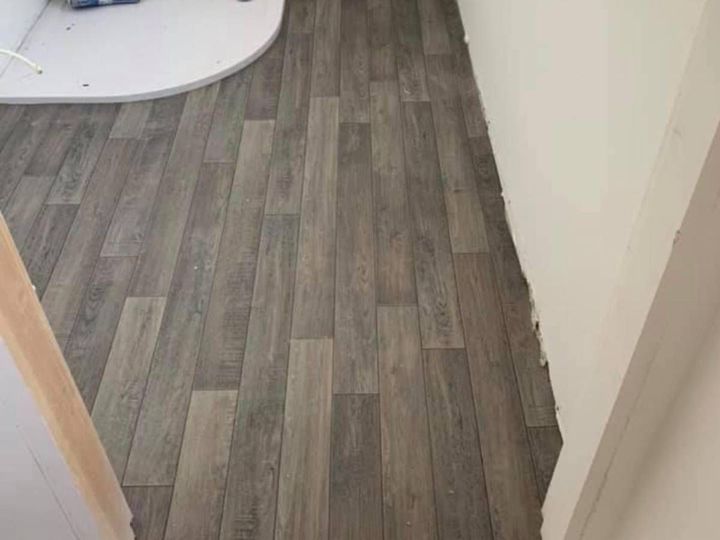
Bathroom Cushion Vinyl
Replaced before the old one split at a seam and let water reach the deck.
Cushion flooring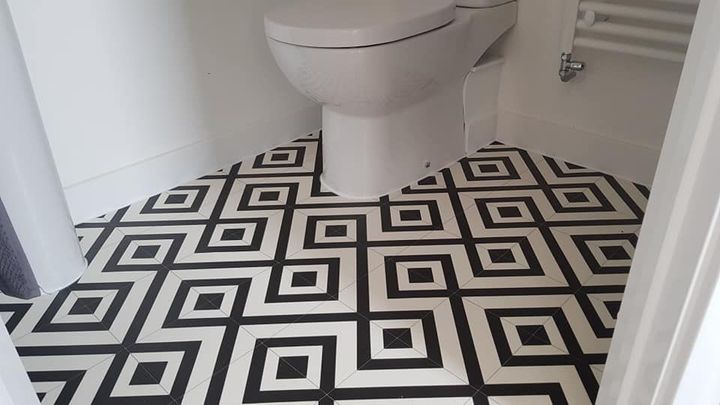
Sheet Vinyl in a Bathroom
One piece where possible, because every seam is somewhere water can eventually get in.
Vinyl flooring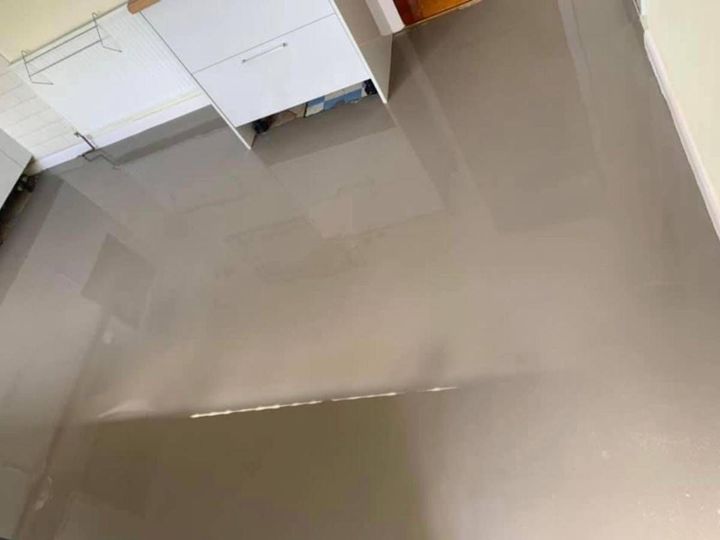
Levelling a Sloping Slab
A converted garage floor falls towards where the door was. Bringing it up has real volume in it.
Floor preparation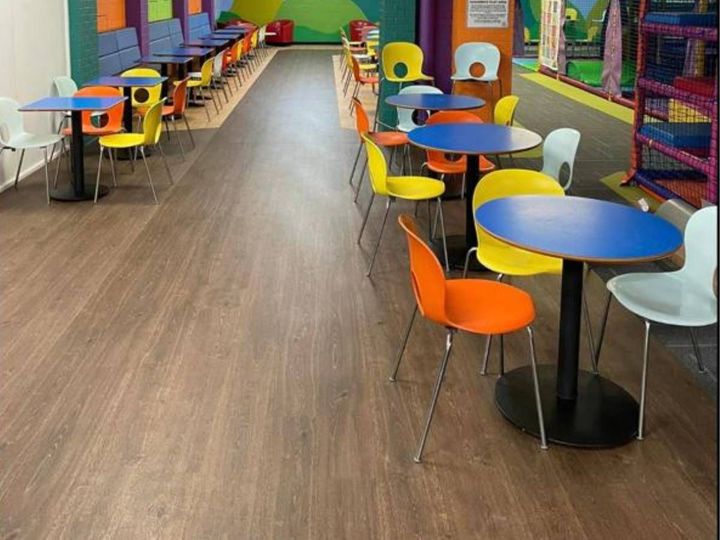
Nursery Floor, Welded and Coved
One washable surface with no joint at the wall, fitted during a closure.
Safety flooring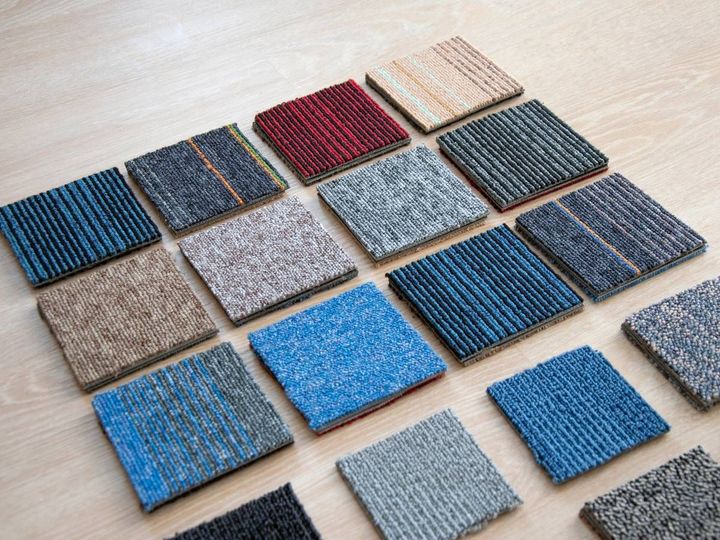
Carpet Tiles for Soft Areas
Whatever gets spilled on one tile costs a tile to put right, not a room.
Commercial flooring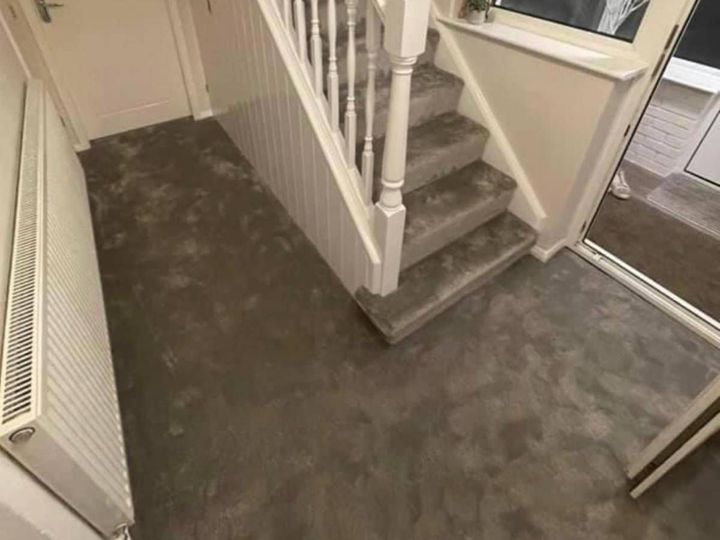
Stairs Recarpeted
Twenty years is about the life of a builder's carpet on a staircase.
Carpet fittingFlooring in Hilton and Etwall
These two villages sit a couple of miles apart on the A50 and A516 west of Derby, and they could hardly be less alike. Etwall is an old village with a Georgian and Victorian core and the Sir John Port almshouses at its heart. Hilton is almost entirely modern — it more than doubled in size between the 2001 and 2011 censuses, built out across the former army depot site, and the great majority of its housing went up inside a fifteen-year window.
That second fact shapes nearly everything we are asked to do in Hilton, and it is not obvious until you see it stated: a village built all at once reaches the age where its floors need replacing all at once too.
A Village Hitting First Replacement Together
If your Hilton house is twenty to thirty years old, this is roughly what we find.
Builder-grade flooring is specified to a budget and it does its job for about two decades. The carpet in the bedrooms goes flat and tired first. The laminate a lot of people put down themselves in the mid 2000s starts to wear through the pattern layer at the doorways and lift along the joints, because AC ratings were less well understood then and a fair amount of it was never rated for a hallway in the first place.
The one that matters most is the vinyl in the kitchen and bathroom, because that one is not just cosmetic. A cushioned vinyl laid twenty-five years ago has usually gone hard and brittle round the edges, and once it splits at a seam or at the edge of a bath panel, water gets past it. What it gets to is the thing worth understanding next.
None of this is a defect and none of it means anything was built badly. It is simply the design life of what was fitted, arriving on schedule across a whole village at once.
The Chipboard Deck and What a Slow Leak Does
Upstairs floors in modern houses are flooring-grade chipboard, usually P5 — the moisture-resistant grade, and generally tinted green so it can be told apart from ordinary board. It is a perfectly good product and it copes with a spill without complaint.
What it does not cope with is being wet for months. A slow leak from a bath seal, a shower tray or a washing machine can run under the vinyl and sit on the deck without anybody knowing, and chipboard that has been saturated for a long period swells and does not recover. It goes soft, it crumbles at the screw holes, and the only repair is to cut out the affected section and replace it.
The signs are worth knowing because they turn up long before anybody lifts a floor: a spongy patch underfoot near a bath or a toilet, a floor that dips slightly in one corner of a bathroom, or a vinyl that has developed a permanent bubble. If any of that sounds familiar, say so when you ask for a price. We would rather price the deck repair into the job than find it on the day and have to stop.
Where the deck is sound, replacing the vinyl or cushion flooring is quick and inexpensive. It is the checking that matters, not the fixing.
Converted Garages: The Floor That Slopes On Purpose
Integral garages are a standard feature of the estate housing here, and a very large number of them have since become a playroom, an office or a fourth bedroom. Converting one throws up a flooring problem that catches people out, and it is worth explaining because it is genuinely counterintuitive.
A garage floor is not flat, and it was never meant to be. It is laid to a deliberate fall towards the garage door, so that rain running off a car drains outwards rather than pooling at the back wall. That fall is commonly somewhere around 25mm to 50mm across the length of the slab.
So when a garage becomes a room and somebody wants one floor running through from the hall, they are not dealing with the 10mm or 15mm mismatch you get between a house and an extension. They are dealing with a floor that slopes the whole way. Bringing it up is a proper levelling job with real volume in it, not a skim, and a decent conversion will have dealt with it already — but plenty were done on a budget and simply had carpet laid over the slope.
The other thing to check in a converted garage is the damp-proof membrane. Garage slabs were not always laid with one, because a garage did not need it, and if the conversion did not address that the floor needs testing before anything impermeable goes down over it.
Etwall and the Older Stock
Etwall is a different job entirely. Brick cottages and Georgian and Victorian houses around the village centre, with solid ground floors of some age and the usual consequences — no longer flat, sometimes laid without a damp-proof membrane, and worth testing rather than assuming.
Around that core Etwall has its own modern infill, which behaves exactly like Hilton. The two things sit on the same street in places, which is why we ask about the age of the house before quoting rather than after.
For the older property, engineered wood is usually the right answer over solid, and a levelling coat over the existing floor is nearly always part of the price.
Nurseries, Pre-Schools and Village Commercial
A village that filled up with young families in one wave acquires the services that go with them, and there are more nurseries, pre-schools and childcare settings around here than the population alone would suggest.
Those have a genuine specification rather than a preference. Wet areas, nappy changing and messy play want welded safety vinyl — hot-welded seams and the vinyl coved up the wall and capped, so the whole floor is one washable surface with no joint at floor level. Soft play and quiet corners are usually carpet tile, which has the advantage that whatever gets spilled on one tile costs a tile to put right.
The rest of it is the usual village mix — a salon, a cafe, the village shops, a couple of small offices. Food premises get welded vinyl with coved skirtings for the same reason a nursery does.
Nurseries and schools are fitted in holidays or over a closure, and we plan around that rather than asking anybody to shut.
Our Flooring Services
Vinyl Flooring
Sheet vinyl for kitchens and bathrooms.
Cushion Flooring
Soft underfoot, warm and waterproof.
LVT Flooring
Luxury vinyl tile, supplied and fitted.
Laminate
AC4 and AC5 rated, unlike a lot of what went down in 2005.
Carpet Fitting
Carpets, grippers and underlay.
Floor Preparation
Levelling converted garages and old solid floors.
Safety Flooring
Welded, coved vinyl for nurseries and pre-schools.
Commercial Flooring
Nurseries, salons, shops and small offices.
Get a Price for Your Floor
Tell us the rooms, the rough sizes and roughly when the house was built. If anything feels soft underfoot near a bathroom, mention that too.
Flooring Questions from Hilton and Etwall Customers
Which areas do you cover around Hilton and Etwall?
Hilton, Etwall, Findern, Willington, Mickleover and the villages along the A50 and A516 west of Derby.
If you are nearby and not listed, ring 01332 215444 and ask.
Our house is about 25 years old and everything seems to be going at once. Is that normal?
Entirely normal, and in Hilton it is happening across the whole village at the same time because so much of it was built inside one fifteen-year window.
Builder-grade carpet and vinyl are specified to a budget with roughly a two-decade design life. They are reaching it on schedule. It is not a sign anything was built badly.
There is a soft patch on our bathroom floor. What is that?
Most likely the chipboard deck underneath has been wet for a long time. Upstairs floors in modern houses are flooring-grade chipboard, usually the moisture-resistant P5 grade, and it handles a spill perfectly well.
What it cannot handle is months of a slow leak from a bath seal, shower tray or washing machine. Saturated chipboard swells and does not recover, so the affected section has to be cut out and replaced. Mention it when you ask for a price so we can allow for it rather than stopping on the day.
How would I know if the deck is damaged before lifting the floor?
Three signs, all of which show up well before anybody pulls a floor up. A spongy or springy patch underfoot near a bath, shower or toilet. A floor that dips slightly in one corner of a bathroom. Or a vinyl that has developed a permanent bubble which does not flatten out.
Any of those is worth mentioning. Where the deck turns out to be sound, replacing the vinyl is quick and inexpensive — the checking is the valuable part.
We are converting the integral garage. Is the floor a problem?
It needs proper attention, yes. A garage floor is laid to a deliberate fall towards where the door was, so rain off a car drains outwards. That slope is commonly 25mm to 50mm across the length of the slab.
So it is not the 10mm or 15mm mismatch you get between a house and an extension — it is a floor that slopes the whole way, and bringing it up is a levelling job with real volume in it rather than a skim.
Our garage was converted years ago and the carpet is going in. Anything to check?
Two things. Whether the slope was ever actually dealt with, because plenty of budget conversions simply had carpet laid over it and you only notice once something hard and flat goes down.
And whether there is a damp-proof membrane. Garage slabs were not always laid with one because a garage did not need it, and if the conversion did not address that, the floor needs testing before anything impermeable goes over it.
What laminate should we choose this time?
Check the AC rating, which is the abrasion class set under EN 13329. A lot of what went down across these estates in the mid 2000s was never rated for the traffic it got, which is why it wore through at doorways.
AC3 is fine for a bedroom. AC4 is the sensible minimum for a hallway, living room or family kitchen. AC5 is built for very heavy use. We will tell you the class of anything we quote.
Do you fit flooring in nurseries and pre-schools?
Yes, and there are a lot of them round here. Wet areas, changing and messy play want welded safety vinyl — hot-welded seams with the vinyl coved up the wall and capped, so the floor is one washable surface.
Soft play and quiet areas are usually carpet tile. Work is scheduled in holidays or over a closure rather than asking a setting to shut.
Areas We Cover
We fit flooring across Derby and the Derbyshire towns around it. Villages near each of these are covered too — if yours is not listed, ask us.
