When you're refurbishing an office, shop, school or care home, taking up the old floor is one of the messiest and slowest parts of the job. So it's a fair question: can the new floor just go over the top? Sometimes it can, and when it can it saves time, cost and disruption. Sometimes it really can't, and getting that wrong is one of the commonest reasons new floors fail.
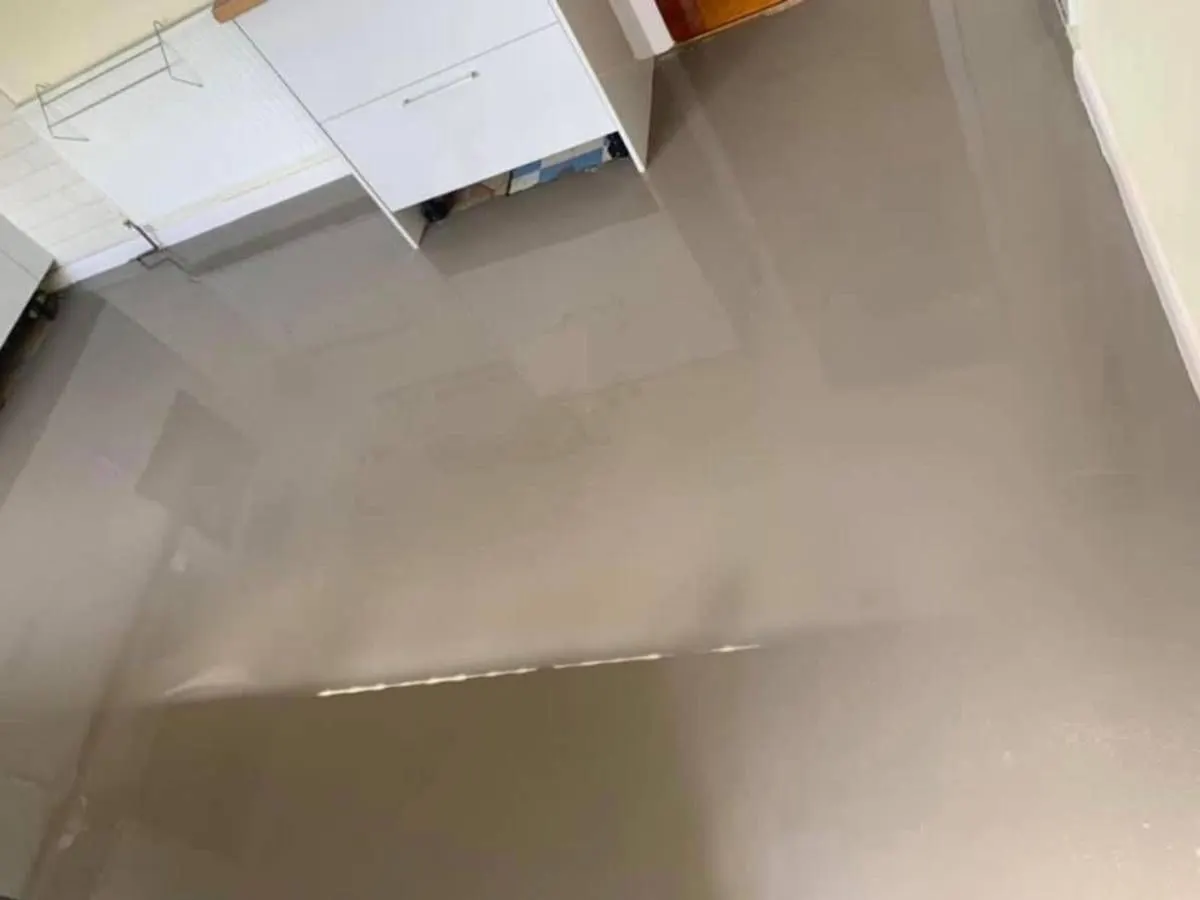
It depends on what's there now
Carpet and carpet tiles
These always come up. Nothing should be laid over a soft, moving base. Old carpet tiles are usually stuck down with a tackifier that can sometimes be left for new carpet tiles, but it has to be removed or sealed before a hard floor goes down.
Sheet vinyl and vinyl tiles
Cushioned vinyl always comes up. A thin, well-bonded commercial vinyl can sometimes be primed and smoothed over rather than lifted, as long as it's firmly stuck everywhere. Any loose areas, bubbles or curling edges mean it has to come up.
Ceramic and quarry tiles
Sound tiles that are firmly bonded can often stay. A suitable primer and a smoothing compound go over them so the grout lines don't show through a new vinyl or LVT floor. Cracked, hollow or loose tiles need taking up or fixing first.
Wooden floors
Boards can usually be overlaid with plywood, but they need to be firmly fixed and free of movement. Bouncy or rotten areas mean looking at what's underneath, sometimes as far as the joists.
Watch out for asbestos in older buildings
In buildings from before 2000, old thermoplastic or vinyl floor tiles and black bitumen adhesive can contain asbestos. Left undisturbed and covered over, it's often safest to leave in place. Lifting, sanding or grinding it is a different matter. Non-domestic buildings should have an asbestos register, and we ask to see it before disturbing an old floor. Overlaying is often the better option in these buildings for exactly this reason.
Every layer adds height
Going over an old floor raises the level, even if only by a few millimetres, and it adds up:
- Doors may need trimming, and fire doors need checking before anyone takes a plane to them.
- Thresholds and transitions to adjoining rooms have to be thought through so there's no trip hazard.
- Fixed equipment, kitchen units and toilet pans may sit lower than the new floor.
Moisture can't be covered up
On a ground-floor concrete slab, covering a damp floor traps the moisture under the new one, where it attacks the adhesive and lifts the floor. We test for moisture before deciding, and if it's too high, a moisture barrier goes down as part of the floor preparation.
Why we check before we quote
The difference between "it can go over" and "it has to come up" makes a real difference to the cost and the time a job takes, so we never guess. We look at what's down, check the bond and the moisture, and ask about asbestos in older buildings. You get a quote based on the floor you actually have.
If you're planning a refurbishment in Derby or Derbyshire, see our commercial flooring services, read what affects the cost of a commercial floor, or get in touch to arrange a survey.